
There is a particular type of intelligence that shows itself only in retrospect.
It is the intelligence of the person who bought a small plot in Kasauli in 2005 because they wanted fresh air for their weekends — and then watched, slightly stunned, as the rest of India discovered hill real estate and drove valuations to levels that made their original investment look almost absurdly prescient.
It is the intelligence of the family that chose Rishikesh over a Noida apartment in 2012 because the parents wanted their children near rivers and forests — and ended up with an asset that has appreciated more than most mutual fund portfolios from that era.
In 2026, that same kind of quiet intelligence is pointing toward Lansdowne.
And at the centre of Lansdowne’s emerging story is Charaktaal Eco Village.
Why Lansdowne, and Why Now
Lansdowne is one of those Uttarakhand towns that has existed in a peculiar state of being simultaneously known and undiscovered. The British Garhwal Rifles established their cantonment here for good reasons — the altitude, the forest cover, the temperate climate, the extraordinary quality of the air. Those reasons have not changed.
What has changed is the context around Lansdowne.
The post-pandemic years created something that urban planners and behavioural economists are still trying to fully categorise: a permanent, structural shift in how a significant portion of the Indian middle and upper-middle class thinks about where they want to live, or at minimum where they want to have the option of living.
The work-from-anywhere movement is real. It is not a trend that peaked and reversed. Remote and hybrid work arrangements have embedded themselves in the professional culture of Indian technology, finance, consulting, and creative industries in ways that are not going away. And when you can work from anywhere, the calculus of property investment changes fundamentally.
Suddenly, a property in Lansdowne is not just a weekend escape. It is a potential primary residence for months at a time. It is a rental asset for the weekends and long holidays you are not using it. It is a hedge against the pollution, noise, and crowding of the metro city that employs you. It is, increasingly, the smarter half of a two-property life strategy.
Lansdowne, sitting at roughly 1,700 metres, 65 kilometres from Haridwar and 25 kilometres from Kotdwar railway station, is accessible enough to be practical and remote enough to be genuinely restorative. It is not three uncomfortable hours from Delhi. It is a drive that most NCR residents can do in half a day and feel that they have arrived somewhere real.
What Charaktaal Eco Village Actually Is
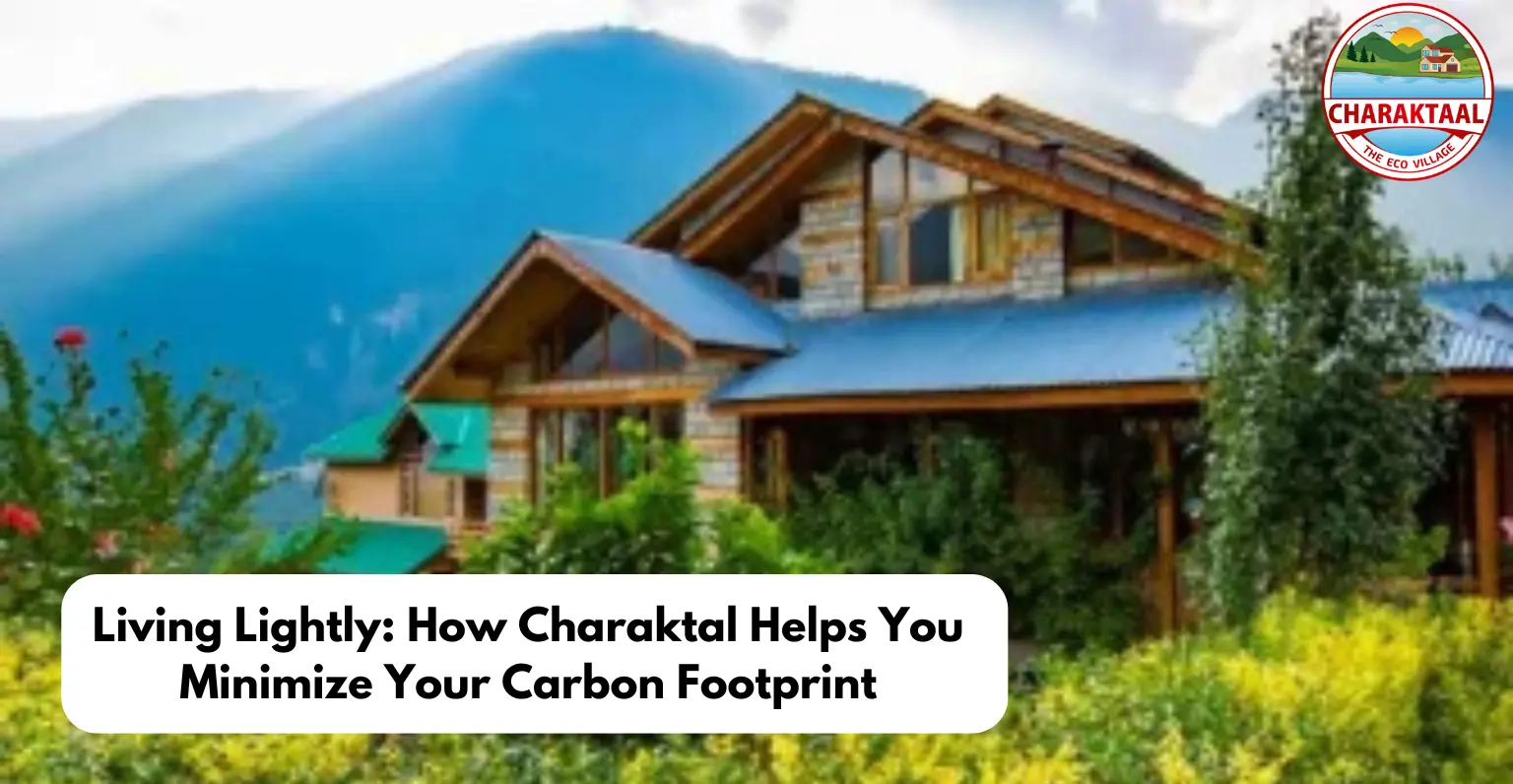
Charaktaal Eco Village is a thoughtfully planned ecological community built in the forested hills near Lansdowne, developed by Charaktaal Greens — a developer whose stated mission is the creation of communities where people and the natural environment genuinely coexist rather than merely coexist on paper.
The project offers a range of property formats: residential plots, studio units, 2BHK Luxe Villas, and 3BHK Sky Mansions — creating an entry point for different buyer profiles, from the first-time hill property investor to the family ready to commit to a full-scale mountain home.
The community is designed around what the developers call a Heal–Play–Live philosophy. It is not marketing language for its own sake. It reflects a genuine design approach: that a community built in this kind of natural setting should be structured to support the wellness, activity, and quality of life that the location makes possible — not simply to maximise density and profit from the land.
Practically, this means the community includes a yoga and meditation deck, organic gardens, forest bathing trails, an open-air amphitheatre, and children’s play areas — infrastructure that would be a differentiator in any development, but in this setting feels almost inevitable.
The Master Plan: Design With Intention
What separates a well-conceived eco-community from a collection of buildings with some trees around them is the master plan — the decisions made before a single structure went up about how the community would be laid out, what would be preserved, and what the daily experience of living here would actually feel like.
At Charaktaal, the master plan reflects several principles that experienced property buyers will appreciate:
Wide internal roads — 20-foot, 25-foot, and 30-foot widths — create a sense of spaciousness within the community and ensure practical accessibility for residents and guests. Narrow internal roads are one of the most common quality-of-life failures in hill developments; their absence here is notable.
Designated green belts and community gathering spaces are protected by the plan — they are not areas that will be developed in future phases or gradually encroached upon. The 65% open space commitment is structural, not aspirational.
Well-demarcated zones for different unit types — plots, studios, villas, mansions — prevent the architectural mismatch that can undermine a development’s character when different density typologies sit too close together.
Solar-lit common areas and underground cabling complete the picture of a community where the quality of daily life has been thought through at every scale.
Nearby Attractions: The Geography of a Life Well Lived
One of the things that makes Charaktaal’s location genuinely special — not just attractive in photographs — is the density of meaningful experiences within reach.
The Durga Devi Temple, Kanvasharam, and Sidhbali Dham represent the deep spiritual and cultural geography of Uttarakhand — the kind of connections to land and tradition that people who choose this kind of living genuinely value.
Jim Corbett National Park is within comfortable range — the closest point of India’s most famous wildlife sanctuary, accessible for a day visit without an overnight journey.
The Army War Museum in Lansdowne offers a historical dimension to the cantonment town’s character that gives it a layered identity beyond just “a hill station with nice air.”
Bhulla Lake — Lansdowne’s serene water body — is the kind of everyday amenity that residents of the community will find themselves using more than any amenity within the development itself. It is the kind of place that becomes part of the rhythm of living here.
These are not selling points in the brochure sense. They are the texture of a life in this location — the things that, over months and years, make a property feel like a home rather than a holding.
The Investment Case: Why This Category Is Appreciating
Let us be direct about the financial dimension of buying into Charaktaal, because it deserves honest analysis rather than vague optimism.
Eco-community properties in Uttarakhand’s mid-hills have outperformed comparable urban real estate in terms of rental yield and capital appreciation over the past five years. The reasons are structural and are not going away.
Supply is genuinely constrained — environmental regulations and the physical limits of hill terrain mean that the number of high-quality planned developments in this altitude band around Lansdowne is finite. You cannot simply build more Lansdownes when demand increases.
Demand is growing from multiple overlapping buyer pools: NCR families seeking second homes, working professionals with remote flexibility, wellness tourism operators, and NRI buyers reconnecting with the idea of a meaningful India property that also generates income.
Short-term rental yields in comparable Uttarakhand eco-communities are running at 6–9% gross annually when managed properly — which means a property in this range can genuinely offset its carrying costs while appreciating in capital value simultaneously.
The zero-pollution zone designation of the Lansdowne area is not a marketing term. Air quality monitoring data from the region consistently shows readings that put it among the cleanest environments accessible within a day’s drive from Delhi. As urban air quality in North India continues to be a public health crisis, the scarcity value of genuinely clean air locations will only increase.
Sustainability as Infrastructure, Not Decoration
Many developments in India use sustainability language decoratively — solar panels appear in renderings, rainwater harvesting appears in brochures, and then the development is built in ways that make neither meaningful.
Charaktaal’s approach is different because the sustainability features are load-bearing — they are part of the infrastructure that makes the community function, not features added to a checklist.
Solar-powered lighting for common areas reduces the community’s dependence on grid power, which is relevant in a hill location where power supply can be unreliable. Rainwater harvesting and underground water storage address the practical realities of a mountain setting where water management matters enormously. The 65% open green space commitment preserves the biodiversity and microclimate that makes the location valuable in the first place.
When sustainability is built into the infrastructure rather than layered on top of it, it creates a different kind of community — one that ages well rather than aging awkwardly, and one that can market itself honestly rather than performatively to the buyers who care about these things.
Who This Property Is For
After reviewing the project in detail, the buyer profiles that Charaktaal genuinely serves well are fairly specific:
NCR and metro-city families who want a second home that functions as both a personal retreat and a managed rental asset when not in personal use. The accessibility from Delhi-NCR makes this viable in a way that more distant hill destinations are not.
Working professionals and digital nomads who want an owned base in a clean-air, low-stress environment and are willing to make it a semi-primary residence. The combination of solar infrastructure, paved internal roads, 24×7 security, and community amenities makes long-stay living here practical, not just romantic.
Investors focused on the Uttarakhand hill property category who want a product that is environmentally positioned, infrastructure-complete, and in the path of growing demand from both domestic and returning NRI buyers.
Families seeking a legacy asset in the hills — a place to bring children and grandchildren into contact with forests, rivers, and a version of India that still feels like India.
The Charaktaal Mantras: A Philosophy Worth Understanding
The project frames its ethos through three Sanskrit-influenced concepts: Heal, Play, and Live.
Heal — the project’s approach to wellness infrastructure: organic nutrition, clean water and air, the natural rhythms of forest and mountain living that research consistently shows reduce cortisol levels, improve sleep, and extend healthy years.
Play — the understanding that physical activity, exploration, and adventure are not luxuries but necessities for a full human life. The forest trails, the open spaces, the proximity to trekking routes and wildlife areas — these are not background features. They are the curriculum.
Live — the integration of spiritual depth, natural beauty, and modern comfort that the Uttarakhand hills uniquely offer. This is not about escaping life. It is about arriving at a version of life that is more fully lived.
Take the Next Step
A development like Charaktaal is best understood by visiting.
The air quality, the forest density, the quality of the light at 6 AM, the sound of the hills at night — these are things that photographs capture partially and descriptions capture less. If you are seriously considering a hill property investment in the Lansdowne corridor, the brochure download and a site visit are the two moves that separate informed decisions from regretted ones.
The supply of well-planned eco-community properties in this altitude band near Lansdowne is not infinite. The demand is growing. The window of early-buyer pricing is measurable in quarters, not years.
Visit: charaktal.com
Call: +91 92115 68264
Charaktaal Eco Village | Lansdowne, Uttarakhand | Plots | Studios | Villas | Sky Mansions
Property investment involves risk. This article is written for informational purposes. Consult qualified financial and legal advisors before making real estate investment decisions.