

Introduction: A Quiet Revolution in How We Live
There’s a shift happening in India. Not the kind that makes headlines or trends on social media. It’s quieter, deeper—the kind that rewires how people think about home, community, and their relationship with nature.
In 2026, a growing movement of conscious individuals is asking fundamental questions: What if my home could exist in harmony with nature rather than dominance over it? What if community wasn’t something we consumed but something we actively created? What if the pursuit of comfort wasn’t at odds with environmental responsibility?
These questions are leading thousands to explore a new way of living: eco-villages. And at the forefront of this movement is Charaktal, a sanctuary that’s redefining what it means to build character, community, and sustainability in the modern age.
This isn’t about retreating from the world. It’s about redesigning how we live within it.
The Crisis of Modern Living: Why Character Matters Again
To understand the eco-village revolution, we must first acknowledge what we’ve lost in the pursuit of modern progress.
The Disconnection Epidemic
The average urban professional spends 90% of their time indoors—in office buildings, apartments, cars, and malls. We’ve created entirely climate-controlled ecosystems that insulate us from natural rhythms. The human body evolved over millions of years to respond to seasons, sunlight, and natural cycles. Modern living violates these fundamental biological needs.
Studies show that nature deficiency correlates strongly with:
- Increased anxiety and depression (affecting 34% of urban professionals)
- Attention disorders and inability to focus
- Weakened immune systems (reduced exposure to environmental bacteria that strengthen immunity)
- Sleep disorders and circadian rhythm disruption
- Reduced creativity and problem-solving capacity
The Character Erosion
There’s a deeper issue beneath these symptoms. Constant comfort and convenience erode character. Character—in the classical sense—is built through:
- Overcoming challenges and adversity
- Direct relationship with consequences of actions
- Community interdependence and contribution
- Connection to something larger than self
- Delayed gratification and meaningful work
Modern urban life offers none of these. Everything is optimized for convenience. Someone else grows your food, treats your waste, maintains your infrastructure. The relationship between action and consequence becomes invisible.
The Community Collapse
Neighborhoods have transformed from communities to collections of isolated households. You can live in a building for five years without knowing your neighbors’ names. Community is something we outsource—to organizations, apps, institutions—rather than something we create together.
This has profound psychological consequences. Humans are tribal creatures. We evolved for millennia in small, interdependent communities. Modern individualistic urban life is evolutionarily unprecedented. The loneliness epidemic affecting urban populations isn’t a personal failure—it’s structural.
Enter the Eco-Village: A Different Model
Eco-villages represent a conscious alternative to this model. But they’re not what most people initially imagine.
They’re not communes where everyone owns everything collectively. They’re not retreats from modern life into primitive conditions. They’re not about rejecting technology or returning to some romanticized past.
Rather, eco-villages like Charaktal are about intentional design. They ask: What would a community look like if designed around human wellbeing, community flourishing, and environmental stewardship rather than mere consumption and convenience?
The Three Pillars of the Charaktal Philosophy
Pillar 1: Sustainability as Foundation
Charaktal isn’t sustainable because it’s trendy. It’s sustainable because sustainability is the only logical way to live long-term without destroying the foundation of your existence.
Water Management: Charaktal uses rainwater harvesting, treats wastewater naturally through constructed wetlands, and recycles water multiple times before returning it to nature. Residents use 40% less water than urban averages while living more comfortably.
Energy Systems: Solar power provides primary electricity. No diesel generators. No dependence on fluctuating grid power. The philosophy is simple: use only what nature provides daily.
Waste Management: There is no “away.” Most waste streams at Charaktal are composted or recycled. What cannot be composted is minimized through conscious consumption patterns.
Food Systems: Charaktal operates permaculture gardens that provide fresh produce. Rather than imported vegetables traveling 2,000+ kilometers to reach residents, food is local, seasonal, and nutrient-dense.
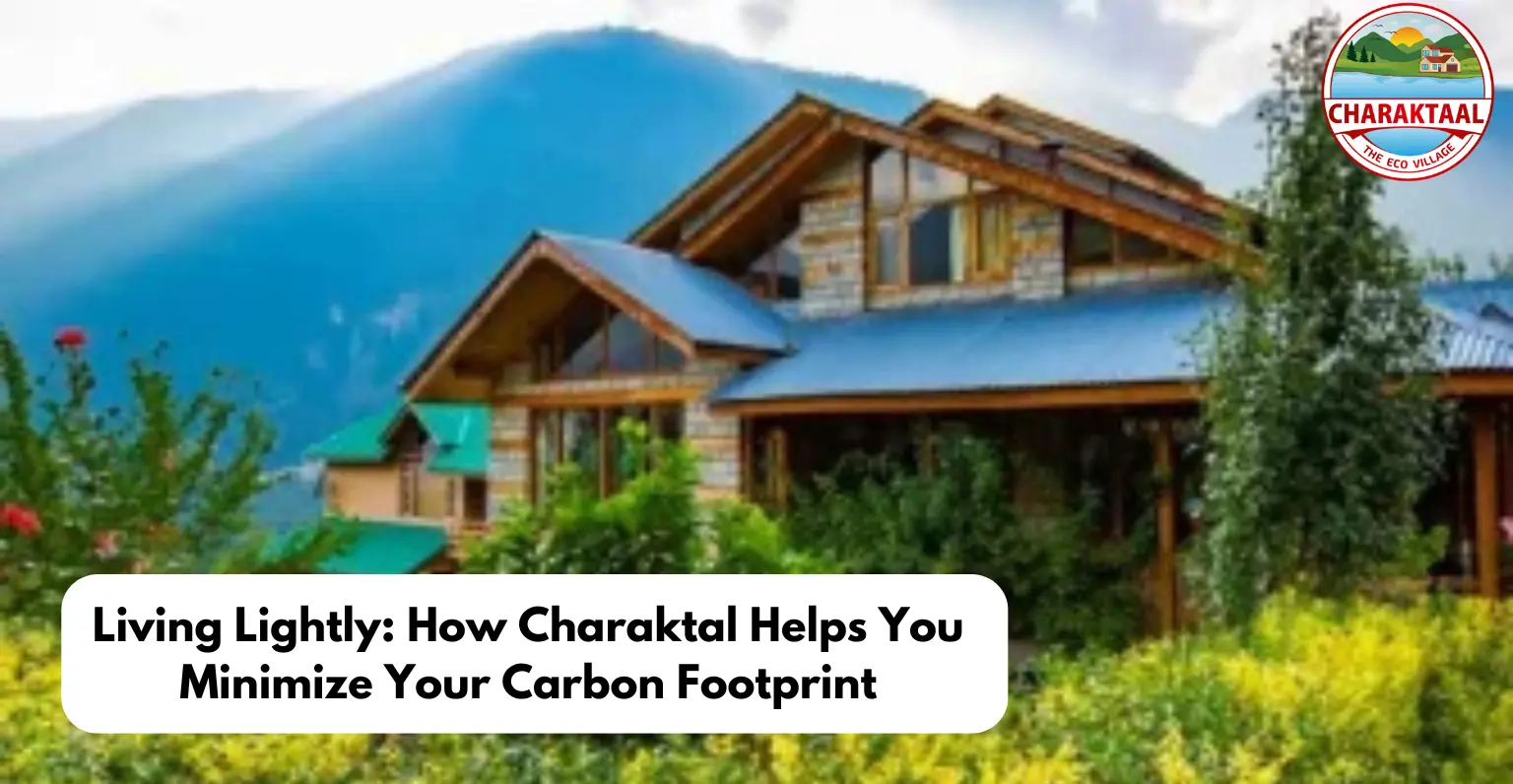
Building Design: Structures are designed using passive cooling and heating—orientation, ventilation, thermal mass—so air conditioning is rarely needed even in summer. Natural light is maximized. Materials are local and low-impact.
This isn’t deprivation. Residents enjoy greater comfort with 80% less environmental impact than urban counterparts. The design is invisible—you don’t feel you’re sacrificing anything. You simply live better with less.
Pillar 2: Character Through Intentional Challenge
At Charaktal, comfort isn’t automatic. This deliberate design choice is central to the philosophy.
Direct Relationship With Consequences: When you generate your own electricity, you understand energy differently. When you compost your waste, you’re aware of what you consume. When you grow some of your own food, agriculture becomes real—not an abstract process happening somewhere else.
This directness builds character. You can’t outsource responsibility. You can’t ignore the consequences of excessive consumption when you see the compost pile building or the water tank diminishing.
Meaningful Work: Maintenance of a sustainable community requires actual participation. Garden work, maintenance, shared cooking, water system management. This isn’t menial labor—it’s purposeful contribution to collective wellbeing.
Psychological research shows that meaningful work (work that contributes to something beyond yourself) is one of the strongest predictors of life satisfaction. Modern careers often feel meaningless. Eco-village life reintroduces work that clearly matters.
Delayed Gratification: Instant gratification is the enemy of character. Charaktal introduces natural rhythms of delay. Food grows seasonally. Projects take time. Community relationships deepen gradually.
In a culture of Amazon Prime and instant streaming, this is countercultural. Yet this delay—this waiting—is exactly what builds patience, appreciation, and depth.
Resilience Through Challenge: Living more self-sufficiently requires learning. Gardening, water systems, renewable energy, food preservation. This continuous learning keeps the mind engaged and builds genuine competence rather than consumer confidence.
The Community Dimension: Why We Need Each Other
Here’s something that happens at Charaktal that most urban residents don’t experience: genuine community.
Interdependence, Not Isolation
Urban life enables complete autonomy—you never need to rely on neighbors. Eco-villages require interdependence. When someone’s garden fails, community support helps. When there’s a skill gap, someone teaches you. When you need help moving, there are hands available.
This mutual dependence isn’t weakness—it’s strength. It creates bonds. It builds social fabric.
Shared Resources, Shared Purpose
Common kitchens, shared workshop spaces, collective gardens—these aren’t just practical efficiencies. They’re community-building infrastructure.
When you cook in your isolated urban kitchen, it’s a solitary chore. When you cook with neighbors, sharing recipes and stories, food preparation becomes social connection. The output (the meal) is the same; the experience is transformed.
Diverse Ages and Perspectives
Unlike age-segregated urban communities (young professionals in one area, families in another, retirees elsewhere), eco-villages naturally integrate diverse ages. Children learn from elders. Elders stay engaged through interaction with younger minds. Middle-aged adults bridge generations.
This diversity strengthens culture and wisdom transmission.
Conflict Resolution and Growth
Communities can’t function with avoidance. When you can’t simply move apartments, you must develop conflict resolution skills. This is uncomfortable but essential for growth.
Eco-villages like Charaktal invest in communication skills, nonviolent communication practices, and conscious conflict resolution. Residents develop emotional intelligence through practice.
The Wellness Transformation: What Living Here Actually Feels Like
Beyond philosophy and structure, what does eco-village living actually do to residents?
Sleep Quality
The combination of natural light exposure, physical activity, reduced artificial light at night, and lower stress produces dramatically improved sleep. Residents report needing 30-45 minutes less sleep while feeling more rested.
Energy and Vitality
Within weeks of arrival, most residents report significant energy increases. Physical activity is natural (not forced exercise). Fresh food nutrition is superior. Stress reduction from community and nature connection is profound.
Mental Clarity
The sensory richness of nature—bird songs, wind in leaves, seasonal changes, growth cycles—activates parts of the brain dormant in urban environments. Creativity increases. Problems that seemed intractable gain new perspective.
Emotional Resilience
Nature’s challenges (weather, seasons, growth cycles) build adaptive capacity. Community connection provides emotional support. The combination produces genuine resilience.
Spiritual Connection
For many residents, eco-village living creates or deepens spiritual practice—not necessarily religious, but a felt sense of connection to something larger than individual self. This might be expressed through nature connection, meditation practice, or community ritual.
The Economic Model: How Eco-Villages Remain Viable
A common misconception is that eco-villages are economically unsustainable—that they require subsidies or external support.
Actually, well-designed eco-villages often have superior economics precisely because they’ve eliminated wasteful inefficiencies.
Reduced Operating Costs
Solar electricity costs nothing once infrastructure is installed. Rainwater harvesting has minimal ongoing costs. Compost management is practically free. Food from gardens costs only labor. Collectively, infrastructure costs are 60-70% lower than urban equivalent.
Higher Satisfaction Per Dollar
Because consumption is reduced and meaningful, each dollar spent produces more satisfaction. You’re not buying endless goods seeking fulfillment; you’re making deliberate purchases that genuinely improve life.
Productive Assets
Charaktal’s properties aren’t just consumption platforms—they’re productive. Gardens produce food. Workshops create goods. Knowledge and skills are shared. The property generates value beyond personal living.
Rental Income Potential
Many eco-villages generate income through educational programs, retreat offerings, and skilled labor. Charaktal offers wellness retreats, permaculture workshops, and community training—generating revenue while serving the broader culture.
Addressing Common Misconceptions
“Isn’t this just rural poverty rebranded?”
No. Eco-villages have high-speed internet, modern healthcare facilities, educational opportunities, and all contemporary conveniences. The difference is these are layered onto intentional design rather than default suburban sprawl.
“Won’t I feel isolated without urban amenities?”
Charaktal is near emerging towns with developing infrastructure. More importantly, internal community provides social engagement often superior to urban isolation. The experience is community-rich, not isolated.
“Is this realistic for people with normal jobs?”
Yes. Charaktal residents include corporate professionals, remote workers, entrepreneurs, and freelancers. The model accommodates professional life while providing retreat and sustainability.
“What about starting from scratch with farming/gardening?”
Community teaching and collective learning curves make this accessible. Most residents had zero agricultural knowledge before arrival; most develop genuine competence within months.
“Isn’t it too idealistic? Won’t human nature undermine it?”
Eco-village design acknowledges human nature rather than denying it. Clear structures, shared values, communication practices, and conflict resolution mechanisms work with human tendencies rather than against them. This pragmatic idealism is what makes it viable.
The Lifestyle Architecture: What a Day at Charaktal Looks Like
To truly understand eco-village life, imagine a day:
6:00 AM: Natural wake (circadian rhythms align to sunlight). Quick meditation or yoga as solo practice.
6:30 AM: Walk through gardens. Check on projects. The boundary between work and recreation dissolves—this is both.
8:00 AM: Communal breakfast in the shared kitchen. Meet neighbors, share plans, enjoy fresh food grown within walking distance. Coffee from local suppliers. Conversation is unhurried.
9:30 AM: Work commitments. Some residents work remotely for urban employers. Others work on community projects. The flexibility is genuine.
12:30 PM: Lunch, often communal. Sometimes home preparation, sometimes shared cooking. The rhythm is human-paced.
2:00 PM: Project time. Garden work, skill development, community maintenance, teaching or learning. This work is visible—you see the direct result of effort.
5:00 PM: Free time. Reading, creation, rest, individual pursuits. The community rhythm doesn’t eliminate solitude; it contextualizes it.
6:30 PM: Evening gathering. Sometimes shared meal. Sometimes workshop or community meeting. Sometimes informal socializing. Participation is voluntary; rhythm is consistent.
8:00 PM: Evening winds down. Natural quiet. Limited artificial light. Early sleep becomes natural rather than forced discipline.
The difference from urban life isn’t deprivation—it’s rhythm. Everything aligns with natural cycles rather than artificial optimization.
The Growth Journey: Why People Stay
Eco-villages succeed not because residents are permanently content but because the model supports growth.
Continuous Learning
From permaculture to renewable energy to communication skills to traditional crafts—the learning opportunities are endless. Growth happens through education and community challenge.
Evolving Roles
As competence increases, roles evolve. New residents become experienced teachers. Learners become leaders. The community develops through its members’ development.
Deepening Relationships
Unlike urban neighborhoods where longevity is coincidental, eco-communities intentionally deepen bonds. Years together build profound friendship and trust.
Purpose Alignment
Urban work often creates dissonance between values and actions. Eco-village living aligns daily actions with deeper values. This coherence is deeply satisfying.
The Broader Movement: Why This Matters
Charaktal isn’t alone. Globally, the eco-village movement encompasses over 10,000 communities with over 1 million residents. In India specifically, communities like Auroville, Pondicherry; GEE (Global Eco Habitats), Karnataka; and others are thriving.
This isn’t fringe. It’s a growing movement of conscious people redesigning how humans can live together sustainably and joyfully.
Environmental Imperative
Climate change isn’t coming—it’s here. The consumption model of modern urban life is environmentally indefensible. Eco-villages prove that dramatically lower environmental impact is compatible with high quality of life.
Mental Health Crisis
Urban centers are experiencing unprecedented mental health crises. Anxiety, depression, and loneliness are epidemic. Eco-villages address root causes rather than symptoms—reconnecting people to nature, community, and purpose.
Community Hunger
Humans are starving for genuine community. The search for belonging drives enormous social energy. Eco-villages provide structures where community forms naturally.
Values Alignment
Increasingly, people want their daily lives to reflect their values. Eco-village living makes this possible. You don’t need to compartmentalize (urban professional by day, environmental concern by night). Your life is coherent.
Is Eco-Village Living Right for You?
Eco-village life isn’t for everyone, but it might be right for you if:
- You feel disconnected from nature and want to deepen that relationship
- You value community and meaningful relationships over convenience
- Your work allows flexibility (remote work, entrepreneurship, etc.)
- You’re interested in continuous growth and learning
- You want your daily actions to reflect your environmental values
- You’re willing to trade some convenience for greater meaning and purpose
It’s particularly powerful for:
- Professionals experiencing burnout
- Parents wanting to raise children in community
- Retirees seeking meaningful engagement
- Entrepreneurs building sustainable businesses
- Wellness and personal development seekers
The Charaktal Vision: More Than Just a Place
Ultimately, Charaktal isn’t just selling real estate. It’s offering a fundamentally different life architecture.
It’s saying: You’ve been taught that the goal is individual success, accumulation, and comfort. What if that’s not actually what makes humans flourish?
What if character is built through challenge, community interdependence, and contribution to something larger than self?
What if the deepest satisfaction comes not from consumption but from competence, connection, and coherence between values and actions?
What if environmental sustainability and human thriving aren’t opposed but actually interdependent?
These aren’t theoretical questions. Thousands of residents at Charaktal and similar communities are answering them through lived experience.
Conclusion: The Life-Changing Choice
The eco-village movement represents something profound: the possibility of redesigning how we live at a fundamental level.
It’s not about sacrifice—it’s about trade-offs leading to better outcomes. Trading isolation for community. Trading consumption for purpose. Trading environmental destruction for regeneration. Trading constant busyness for rhythmic living.
The people who make this choice don’t return to urban life. Not because it’s impossible, but because they’ve experienced something better—not better as consumption, but better as meaning, connection, and alignment.
In 2026, more people are making this choice. They’re discovering that the good life isn’t found in bigger apartments or more luxury goods. It’s found in connection—to nature, to community, to authentic work, to themselves.
This is the Charaktal way. It’s the eco-village revolution. And it’s proving that a different way of living—sustainable, meaningful, connected—isn’t just possible. It’s infinitely superior.
Ready to experience the Charaktal way? Discover how intentional living, genuine community, and harmony with nature can transform not just how you live, but who you become.