
There is a particular kind of silence you only find in the Himalayan foothills — one that doesn’t feel empty, but full. Full of birdsong, of wind moving through pine trees, of distant water tumbling over stone. It is the kind of silence that, once you have heard it, makes the ambient roar of city life feel like something close to violence.
Most of us have forgotten that our homes are supposed to feel like that. Not just shelters from weather, but actual places of restoration — sanctuaries where the air does not taste of exhaust, where the view from the window does not end at another concrete wall, where the morning does not begin with the anxiety of traffic and noise. Somewhere along the way, we traded all of that for convenience and called it progress.
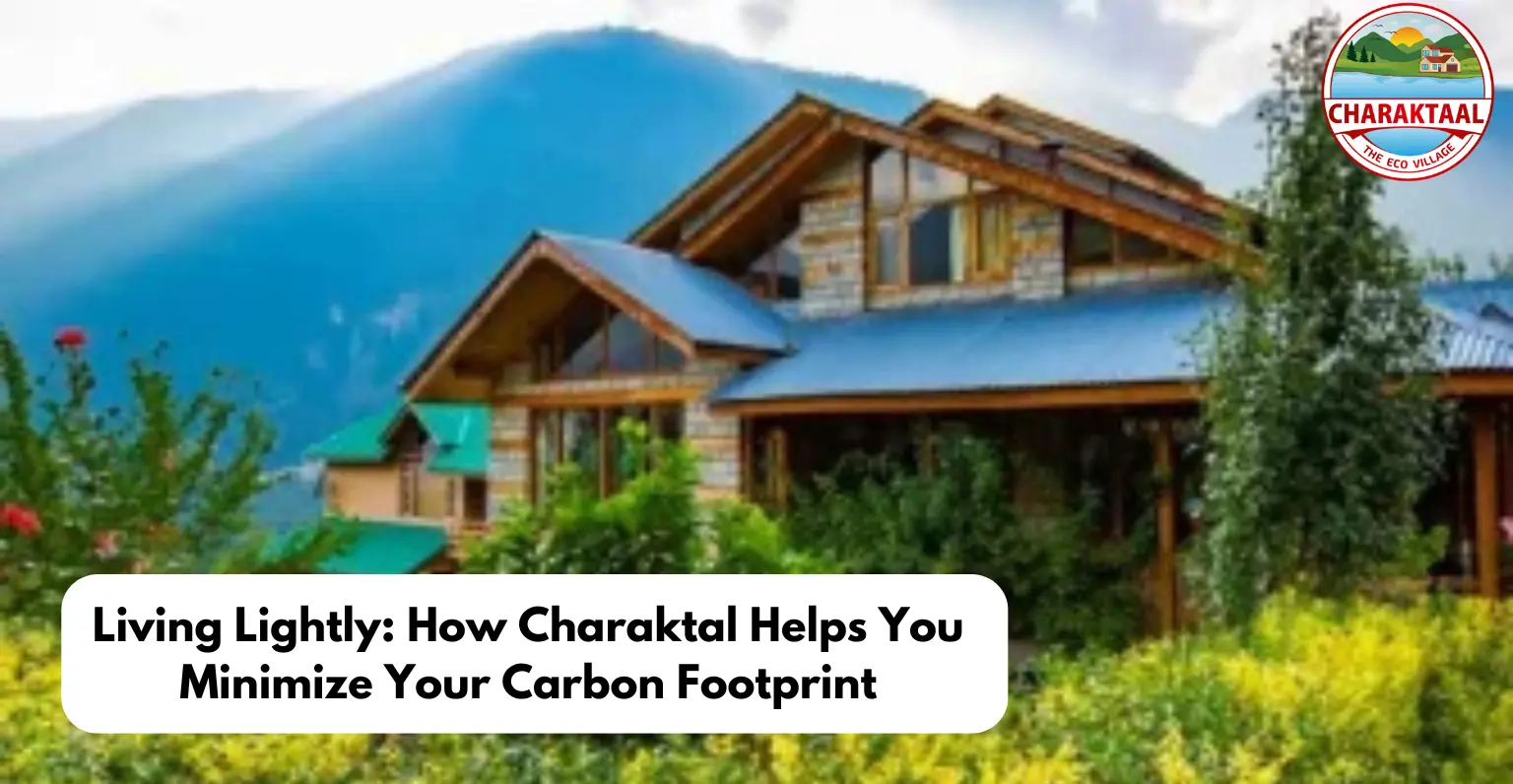
Charaktaal Eco Village, nestled in the serene hills of Lansdowne, Uttarakhand, is a direct and intelligent answer to that trade-off. And the people who are discovering it are not running away from modernity. They are simply choosing to renegotiate its terms.
The City Bargain Nobody Read Carefully
Let’s be honest about what urban living actually costs — not just in rent or EMI, but in the currency of lived experience.
In India’s major cities right now, air quality indices regularly climb into the “hazardous” category during winter months. The average urban dweller spends somewhere between two to three hours per day commuting. Studies on urban sleep quality consistently show that city residents sleep less deeply and wake less restored than their rural counterparts. Rates of anxiety and lifestyle diseases — hypertension, metabolic disorder, chronic fatigue — have risen in lockstep with urbanisation over the past two decades.
None of this is a secret. We know it. We scroll past the statistics while commuting on phones, surrounded by the very conditions those statistics are documenting. The problem was never awareness. The problem was that the alternative seemed impractical, unaffordable, or simply non-existent at the right level of quality.
That problem is now being actively dismantled — and eco-village living is at the forefront of that dismantlement.
What an Eco-Village Actually Is (And Isn’t)
The term “eco-village” carries some baggage. For some, it conjures images of off-grid communes, composting toilets, and a general rejection of comfort. That vision, while valid for some communities, has very little to do with what serious eco-village development looks like in 2026.
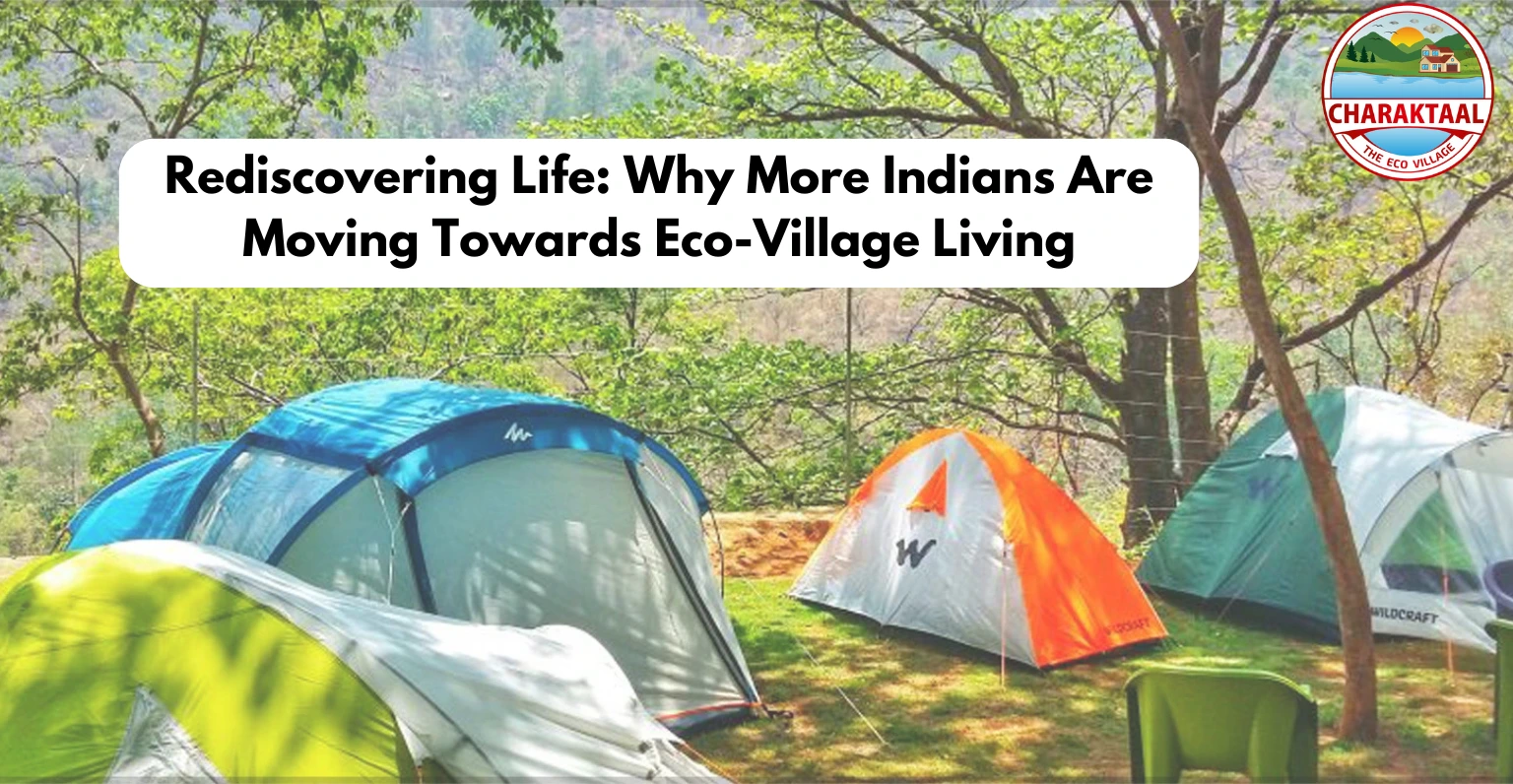
A modern eco-village is, at its core, a planned community that makes ecological responsibility and human wellness central to its design — not afterthoughts. It means solar-lit common areas instead of diesel generators. It means rainwater harvesting systems instead of groundwater exploitation. It means organic gardens where residents grow a portion of their own food, not because they have to, but because research consistently shows that contact with soil, plants, and growing things is profoundly good for human mental health.
It means building a community where like-minded people choose to live consciously — and it means doing all of this without sacrificing the quality of construction, the elegance of design, or the infrastructure that makes modern life functional.
Charaktaal Greens, the development firm behind Charaktaal Eco Village, operates from precisely this understanding. The project spans lush landscapes in Lansdowne and offers plots, studio apartments, 2 BHK Luxe Villas, and 3 BHK Sky Mansions — each designed with the dual intention of architectural excellence and ecological responsibility.
This is not rustic living wearing a luxury label. It is luxury living that has genuinely rethought what luxury means.
Lansdowne: The Location That Does Half the Work
Location in real estate is everything, and in wellness-focused living, it is even more everything. Charaktaal’s address in the Lansdowne hills is not incidental — it is foundational to the entire proposition.
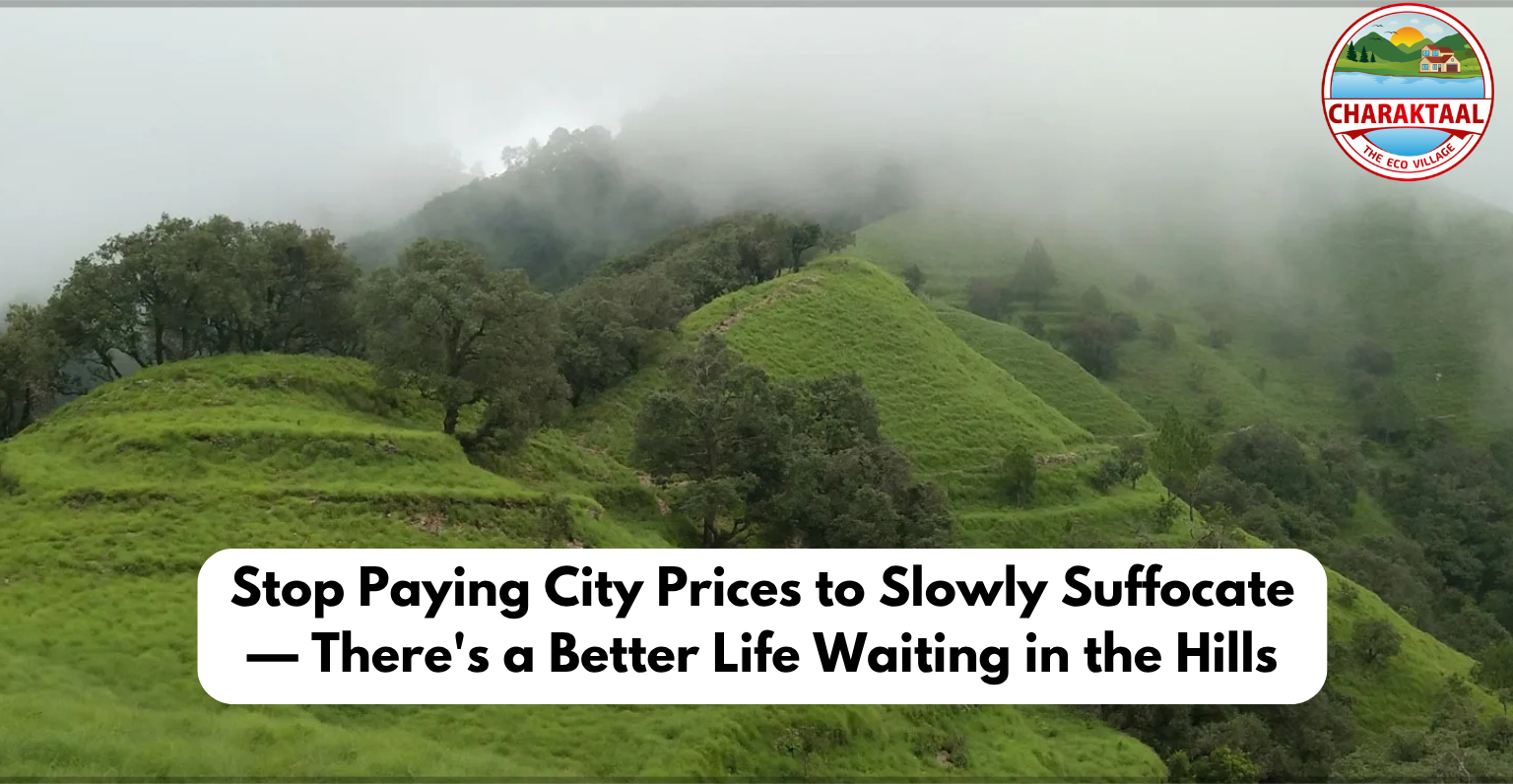
Lansdowne sits at approximately 1,706 metres above sea level in the Pauri Garhwal district of Uttarakhand. It is one of those towns that escaped the over-tourism that consumed Mussoorie, Nainital, and Shimla. The British Army established a cantonment here in 1887, and the town retains that unhurried, well-kept quality that garrison towns in hill stations often do. The forests here are dense with oak and rhododendron. The skies are legitimately dark at night. The air has the particular crispness that arrives when you remove pollutants and add altitude.
Charaktaal Eco Village sits 25 kilometres from Lansdowne’s town centre and 65 kilometres from Haridwar — close enough to civilisation to be practical, far enough from it to be meaningful. The Dehradun Airport is 120 kilometres away. Kotdwar Railway Station serves as the nearest major rail head, making the property accessible from Delhi and other major cities without the white-knuckle driving that more remote Himalayan locations demand.
The project is also surrounded by exceptional natural and cultural landmarks. Jim Corbett National Park — one of India’s most celebrated wildlife reserves and the oldest national park in Asia — is within comfortable driving distance. The Durga Devi Temple, Sidhbali Dham, Kanvasharam, and the Tadkeshwar Mahadev Temple form a ring of spiritual sites around the property that give the region a deep cultural resonance. These are not tourist checkboxes; they are expressions of a landscape that has been considered sacred and significant for centuries.
When your home sits inside that kind of geography, something changes in how you relate to where you live.
The Architecture of Wellness: How Charaktaal Is Designed
There is an emerging field of research called biophilic design — the practice of building environments that reflect and reinforce humanity’s evolved connection to nature. It draws on decades of evidence showing that exposure to natural light, greenery, flowing water, natural materials, and open sky measurably reduces cortisol, improves mood, accelerates healing, and enhances cognitive function.
Charaktaal is built around these principles without making them feel clinical or theoretical.
Sixty-five percent of the total development area is preserved as open green space. That number is extraordinary by any standard — most urban residential developments struggle to maintain 10 to 15 percent green coverage. Here, the majority of the land simply remains land: forests, gardens, trails, and sky.
A dedicated yoga and meditation deck provides a structured space for the practices that, more than almost anything else, help regulate the nervous system and restore the kind of mental clarity that urban environments systematically erode. The forest bathing trails — drawing on the Japanese practice of Shinrin-yoku, or the therapeutic absorption of forest atmosphere — allow residents to decompress through something as simple and profound as walking slowly among trees.
The club house with multipurpose hall and the open-air amphitheatre create spaces for community — for the dinner parties, the festivals, the concerts, and the conversations that make a neighbourhood feel like a neighbourhood. The children’s play area is set in green surroundings rather than tarmac. The entire project is secured with 24×7 security and surveillance, and internal roads are well-planned at 20, 25, and 30-foot widths. Underground cabling keeps the visual landscape clean and uncluttered.
Solar-lit common areas cover 80 percent of the project’s lighting requirements. Combined with the rainwater harvesting infrastructure, the project operates with a significantly lower ecological footprint than any comparable conventional development.
This is what it looks like when infrastructure is designed with intention.
The Philosophy Behind the Project: Heal, Play, Live
Charaktaal’s guiding philosophy is distilled into three words: Heal. Play. Live. They sound simple. They are not.
Heal is the hardest one, and the most necessary. Modern life produces a kind of chronic low-grade depletion — not dramatic enough to call illness, not mild enough to ignore. It lives in the tension behind your eyes at the end of a long day, in the difficulty of sleeping deeply, in the faint but persistent sense that you are running just slightly below your own potential. Healing this is not a weekend activity. It requires a change in the ambient conditions of daily life. Clean air, clean water, organic food grown nearby, time in green spaces, a reduction in digital and sensory overload — these are not luxuries. They are, quite literally, medicine.
Play is the word adults have forgotten belongs to them too. The open-air amphitheatre, the trails, the proximity to Corbett and the rivers and the hills — these are not amenities on a brochure. They are invitations to remember what your body was designed to do. Walk. Climb. Swim. Sit under a sky full of stars and feel genuinely small in the best possible way.
Live is perhaps the most radical of the three, because it implies that what most of us are doing in cities is something other than fully living. It is not a judgment. It is an honest observation about what happens when we spend the majority of our waking hours in artificial environments, eating processed food, breathing compromised air, and measuring success primarily in financial terms. Charaktaal offers a different metric: the quality of your mornings, the depth of your sleep, the health of your children, the richness of your community, and the feeling — perhaps undervalued in modern discourse — of being genuinely at home.
The Investment Argument (Because It Matters Too)
It would be dishonest to write about Charaktaal without addressing the financial dimension, because this is not purely a lifestyle conversation — it is also a real estate and investment decision, and it is an extremely compelling one.
Lansdowne and the Pauri Garhwal belt are among the last genuinely undervalued hill station corridors in India. The Mussoorie and Nainital markets are saturated; prices there reflect decades of demand and now represent poor value relative to quality of life. Lansdowne has not yet experienced that inflation. It has the natural beauty, the clean air, the cultural significance, and the accessibility — it has simply not yet attracted the volume of attention that drives speculative price rises.
That window is closing. Infrastructure in Uttarakhand — roads, rail, airports — is receiving significant government investment. Remote work has permanently altered the calculus of where educated professionals choose to live. Wellness tourism is one of the fastest-growing segments of the global travel industry, and properties that serve both as personal residences and potential short-term rental assets in wellness destinations represent a category with exceptional return potential.
Charaktaal specifically offers excellent ROI not despite its eco-conscious design but because of it. A zero pollution zone is not a lifestyle preference — it is an increasingly rare and therefore increasingly valuable geographic attribute. A property in a wellness-focused lifestyle destination, backed by quality construction and genuine green credentials, is exactly the kind of asset that appreciates in an era when cities are becoming harder to live in.
The project offers diverse entry points: plots for those who want to design their own vision, studios for those seeking a weekend retreat or a rental asset, 2 BHK Luxe Villas for families wanting a permanent second home or primary residence, and 3 BHK Sky Mansions for those who want the full expression of what conscious luxury looks like in the Himalayas.
A Note on Community
Real estate can give you walls and a roof. It cannot give you neighbours worth having. This is where the intentional community model of an eco-village offers something genuinely different.
The people drawn to a project like Charaktaal share, by definition, a set of values: a preference for slower living, a concern for the environment, an interest in wellness, and a willingness to invest in something thoughtfully made. These are not bad neighbours to have. They are, in fact, the kind of neighbours that make a place feel like a community rather than a collection of strangers sharing a postcode.
Shared spaces — the amphitheatre, the club house, the organic garden, the meditation deck — create the conditions for the casual encounters and the growing friendships that urban apartment living has made structurally almost impossible. There is a reason the research on loneliness consistently finds that density does not produce connection; it takes design and shared purpose to do that.
Charaktaal is designed around that understanding.
The Practical Path Forward
If any of this resonates — if something in you recognises the description of a life that breathes — the practical next step is simple. Visit. Not a virtual tour, not a brochure — actually go to Lansdowne. Stand in the forest. Smell the air. Look at what has been built and what remains wild.
The project welcomes visitors, and the team at Charaktaal Greens brings decades of real estate experience alongside a genuine philosophical commitment to what they are building. These are not people who stumbled into eco-development as a marketing angle. The intention is evident in every design decision, from the 65 percent green coverage to the Reiki symbols embedded into the project’s spiritual identity — the Choku Rei of power and energy, the Sei He Ki of purification and clarity, the lotus that rises each morning renewed.
Final Thought: Homes That Heal
The ancient Indian concept of Vastu is sometimes dismissed as superstition, but its underlying insight is sound: the spaces we inhabit shape us. The orientation of our rooms, the quality of light, the proximity of water and green things, the sense of being protected and open simultaneously — these are not decorative concerns. They are fundamental to human wellbeing.
Charaktaal Eco Village is being built from that understanding. It is not a retreat you visit when you are burnt out. It is a place you come to live — daily, fully, sustainably — in the conviction that the quality of where you are shapes the quality of who you become.
The Himalayan foothills have been healing people for a very long time. The silence there is still full.
Discover Charaktaal Eco Village in Lansdowne, Uttarakhand. Enquire at charaktal.com or call +91 92115 68264.