

Why the Second Home Market in India Has Permanently Changed
For most of India’s middle and upper-middle class, a second home was historically a retirement thought — something you planned for after the children were settled, the primary home was paid off, and you had accumulated enough surplus to buy something at your hometown or a favourite hill station without financial stress. That was the traditional timeline.
That timeline no longer holds. The shift began accelerating during the pandemic years, when urban professionals discovered, often involuntarily, that location-independent work was more feasible than they had assumed. It deepened when the quality-of-life gap between Indian cities and their surrounding natural areas became viscerally apparent to people spending months inside apartments in dense urban centers. And it has stabilised into a permanent behavioural shift, backed by data, toward a segment of Indian property buyers who are purchasing second homes not as retirement assets but as active parts of their current lives — simultaneously generating rental income, serving as personal getaways, and appreciating in value.
The second home market in India in 2026 is larger, more professionally structured, and more diverse than it has ever been. Understanding it properly requires separating the genuinely compelling opportunities from the wishful thinking, and building a framework that answers the three core questions every serious buyer should ask: What am I actually buying? How will it earn? When will I use it?
This blog gives you that framework — complete, honest, and actionable.
The Three Categories of Second Home Buyer (And Which One You Actually Are)
Most second home decisions go wrong not because the property was bad, but because the buyer had not been honest with themselves about why they were buying. There are three distinct buyer profiles in this market, and the right product and location choice differs significantly for each.
The Lifestyle Buyer purchases primarily for personal use. Weekend escapes from urban stress, family holidays, a place that feels like theirs without the logistics and cost of hotels. This buyer needs to prioritise accessibility above almost everything else — a beautiful property that requires a 9-hour drive will be used four times and then avoided. Location within a 3-to-5 hour driving radius of the buyer’s primary city is the non-negotiable factor for this profile. Interior quality, local amenities, and the character of the destination matter more than rental yield potential.
The Investment Buyer purchases primarily for financial returns, through capital appreciation, rental income, or both. This buyer needs to prioritise market fundamentals — demand-supply dynamics in the destination, infrastructure trajectory, tourist arrival trends, and realistic rental yield data rather than projected figures from optimistic developer spreadsheets. A property that earns well but that the buyer has no personal attachment to is a fine outcome for this profile. A property that earns poorly but “looks beautiful” is a failure.
The Hybrid Buyer — which is, in practice, the largest segment — wants both. Personal use during certain months, rental income during the periods when the property sits empty, and long-term appreciation. This buyer needs to be brutally honest about the tension between these goals, because they do not always point toward the same property. A property optimised for maximum rental income in a high-demand tourist destination may be booked by others during the exact weekends when the buyer most wants to use it. Resolving this tension — rather than pretending it does not exist — is the work that needs to happen before choosing a location, a property type, or a price point.
Knowing which of these three profiles describes you with most accuracy is the prerequisite to making a good decision. Everything that follows assumes you have done that self-assessment.
Destination Deep-Dive: What Makes a Second Home Location Actually Work
Not every hill station is a second home investment destination. Not every river-adjacent plot is a vacation rental opportunity. The factors that separate destinations with genuine long-term viability from those that merely look picturesque in a developer’s brochure are specific and largely unrelated to natural beauty.
Connectivity trajectory. A destination that is currently 6 hours from Delhi by road but sits on a highway that is actively being upgraded to a 4-lane expressway is a fundamentally different investment from a destination at the same current travel time where the road infrastructure has not changed in a decade. Infrastructure improvement compresses distance psychologically. When Chandigarh became a 2.5-hour drive from Delhi with the completion of the NH-44 upgrades, property demand in Kasauli and the surrounding belt shifted materially. The investor who bought before those improvements captured significant appreciation. The investor who bought after paid the post-connectivity premium.
Year-round viability. Many scenic destinations in India are heavily weather-dependent — accessible and comfortable for 5 months, difficult or inaccessible for the rest. A second home or vacation rental property in a location with genuine year-round viability has a fundamentally higher rental yield potential than one in a seasonal destination. The calculation is not just about peak-season rates but about annual occupancy — and annual occupancy determines annual rental income.
Regulatory stability. Himachal Pradesh, Uttarakhand, and several other hill states have at various points imposed restrictions on non-domicile property purchases, construction near ecologically sensitive zones, and commercial conversion of residential properties. Buyers who ignore these regulatory realities and proceed on the assumption that current rules will remain unchanged are accepting a risk that is often not factored into the property’s listed price. Due diligence on regulatory environment is not optional in hill property purchases — it is a core part of the financial analysis.
Existing hospitality ecosystem. A destination with good hotels, restaurants, local transportation options, and recreational infrastructure is far easier to rent out than one where the property owner needs to supply all of these by proxy. Guests who book vacation rentals in 2026 are not sacrificing convenience — they are seeking a particular kind of private living experience within an ecosystem that otherwise supports them. A beautiful property in a location where guests cannot find reliable food options, local transport, or connectivity will see its rental reviews suffer accordingly.
The Numbers Behind the Decision: Realistic ROI on Indian Second Homes
The most common mistake in second home financial analysis is using developer-provided rental yield projections as the baseline assumption. These projections are almost always optimistic because they use peak-season occupancy rates as if they were year-round norms, and because they do not account for property management fees, maintenance costs, vacancy periods between bookings, platform commissions, housekeeping costs, and the occasional refurbishment that every active rental property needs every few years.
A more honest framework for second home ROI analysis looks like this:
Gross annual rental income = (Peak season weekly rate × peak weeks occupied) + (Off-season nightly rate × off-season nights occupied). A property that earns ₹8,000 per night during peak weekends (roughly 30 peak weekends per year at 70% occupancy) and ₹3,000 per night during off-season (roughly 180 remaining nights at 40% occupancy) generates roughly ₹16.8 lakhs + ₹21.6 lakhs = ₹38.4 lakhs in gross annual rental income. These are illustrative numbers that require location-specific verification.
From this, deduct: Property management platform commission (typically 15–25%), housekeeping and maintenance (estimate 8–12% of gross), property taxes and insurance (2–3% of property value annually), and periodic refurbishment amortised over 5–7 years (typically 5–8% of gross).
Net yield on a ₹60–80 lakh property investment in a well-managed, well-located vacation rental destination in India typically falls in the 5–9% range. Some premium destinations with very high occupancy rates push beyond this; some underperforming destinations fall below 4%. The difference between these outcomes is almost entirely explained by the destination quality factors described above — not the property’s interior aesthetic.
Capital appreciation in successful hill destination real estate over the last decade has ranged from 6% to 14% compounded annually depending on the location, with the higher end reserved for destinations that saw significant connectivity improvements. Combined with net rental yield, the total return on a well-chosen second home investment in India is competitive with many other asset classes — and comes with the additional benefit of personal use value that financial calculations do not capture.
The Property Management Question Nobody Asks Until It’s Too Late
A second home that is not actively and professionally managed is not a rental asset — it is a liability. The management challenge of a vacation rental property is real, and it is often invisible during the purchase decision phase, when everything feels straightforward.
Between bookings, someone needs to verify the property is clean and well-maintained. Before each check-in, someone needs to confirm the property is ready. During a guest’s stay, someone needs to be reachable for issues. After check-out, someone needs to inspect the property, arrange cleaning, and prepare for the next booking. For an owner who lives 5–8 hours from the property — the typical situation for a Delhi NCR or Mumbai buyer with a hill station second home — managing this personally is not realistic.
Professional property management changes the economics significantly, but also changes the feasibility calculation entirely. With a professional manager handling bookings, guest communication, housekeeping coordination, and minor maintenance, the property functions as a genuine passive asset. The owner receives periodic payouts, reviews performance data, and visits at their own convenience. Without that management layer, the “passive income” promise of vacation rental property becomes anything but passive.
The emergence of tech-enabled property management platforms in India — which provide dashboard access to occupancy data, booking calendars synced with major platforms, and end-to-end guest support — has made this model genuinely accessible to Indian investors at scale. This is the operational infrastructure that separates a successful second home portfolio from a well-intentioned mistake that sits half-used and financially underperforming.
Eco-Living and Nature Homes: The Investment Category That Is Outperforming
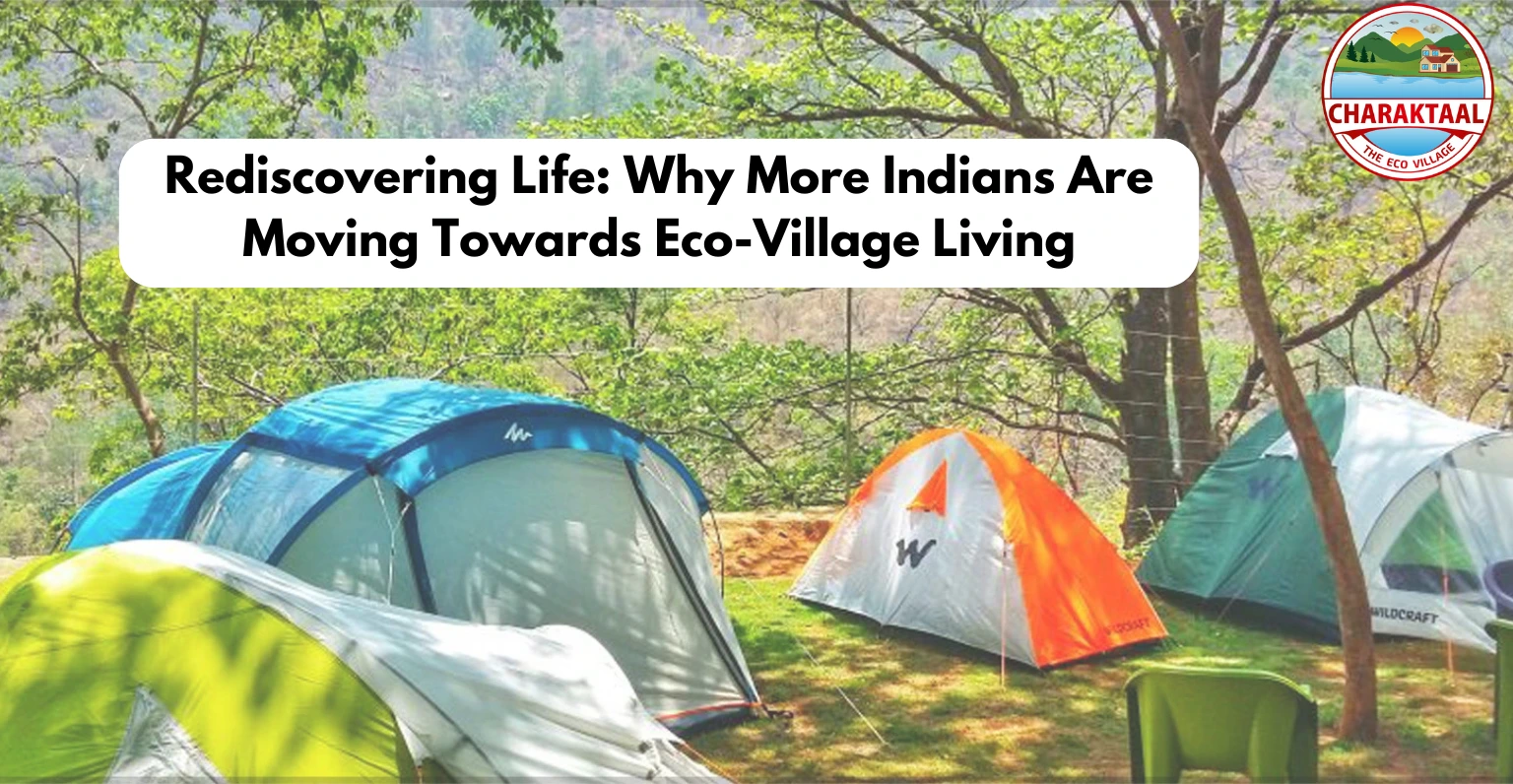
Within the second home market, one category has been notably outperforming the broader segment: properties that are genuinely integrated with natural environments — forested land, river frontage, wildlife corridors, and ecologically distinctive habitats.
The demand drivers here are multiple and reinforcing. Urban professionals who have spent decades in dense cities are willing to pay a significant premium for accommodation that provides genuine sensory contrast — not a hill-station apartment with a mountain view, but actual immersion in natural environments. The experiential travel trend, which has been reshaping India’s hospitality industry for the past several years, has created a guest profile that specifically seeks out properties in forested, waterfront, and ecologically rich locations.
Properties situated within or adjacent to forest zones — particularly in the sub-Himalayan Terai belt of Uttarakhand, the river valleys of Himachal Pradesh, and the Western Ghats fringe — command occupancy premiums of 20–40% over comparable properties in purely agricultural or semi-urban settings. Guests pay more, stay longer, and leave better reviews. The word-of-mouth and repeat booking rates for genuinely immersive nature properties are also significantly higher than for standard vacation rentals.
From an investment standpoint, eco-living properties in India are also benefiting from the global trend toward sustainable and low-carbon travel, which is reshaping how travel platforms rank and recommend properties. Listings with authentic ecological credentials are increasingly favoured by algorithm-driven platforms, improving discoverability and booking conversion rates for qualified properties.
How to Vet a Second Home Project: The Checklist That Saves You From Common Traps
The second home and vacation property segment in India has attracted both genuinely excellent projects and a number of poorly structured offerings that promise lifestyle outcomes they cannot deliver. The checklist below is built around the questions that distinguish one from the other.
Land title clarity. Is the land ownership clear and undisputed? Has title verification been done by an independent lawyer with experience in the specific state’s property law? In hill states, tribal land restrictions, forest land adjacency regulations, and the distinction between agricultural and non-agricultural land use permissions all create potential complications that are invisible in a developer’s brochure.
Approvals and RERA status. For projects above the RERA threshold, is the registration number verifiable on the state RERA portal? Are building plan sanctions, environmental clearances (if required), and utility NOCs in place?
Developer track record. Has this developer delivered completed projects in this or similar locations? Can you speak with owners of previously completed projects? Past delivery is the best available predictor of future delivery.
Rental management commitment. If the project is being marketed partly on rental income potential, what is the specific operational model for rental management? Who manages bookings? What is the commission structure? What is the guaranteed return (if any), and what are the specific legal terms backing that guarantee?
Exit liquidity. Can you sell this property, and to whom? The resale market for second homes in some locations is thin — meaning that while the property may appreciate in value, converting that appreciation to cash can be slow and costly. Locations with active buyer interest, good developer reputation, and verified title are far more liquid than those without.
Apna Adda: The Platform Built for This Moment
Apna Adda was built precisely for the buyer who has done the analysis above and wants a trusted, tech-enabled partner to navigate India’s second home market without the information asymmetry that has historically favoured developers over buyers.
The platform offers verified listings across India’s most compelling second home destinations — from the sub-Himalayan Terai belt near Kotdwar in Uttarakhand to the Kasauli-adjacent hillside communities in Himachal Pradesh, riverside plot developments, and curated eco-village projects — all screened for legal clarity, construction quality, and genuine rental potential.
Beyond listings, Apna Adda’s end-to-end support model covers the full lifecycle of second home ownership: ROI analysis before purchase, legal and due diligence coordination, professional property management post-acquisition, and rental income optimisation through AI-powered pricing and multi-platform listing. Investors who want genuine passive income from their second home — rather than the theoretical passive income that is really a full-time management obligation — find in Apna Adda the operational infrastructure that makes the difference.
For travellers and digital nomads who want to experience India’s most distinctive natural destinations before committing to ownership, the platform’s verified homestay listings offer authentic, curated options across these same locations — a way to understand what ownership in a destination actually feels like before signing anything.
Making the Decision: Your Second Home in 2026
The second home market in India in 2026 is mature enough to offer genuine investment-grade opportunities, professionally enough managed to make passive income actually passive, and driven by strong enough demand fundamentals to support both rental income and capital appreciation over a 5–10 year horizon.
What it requires from buyers is the same discipline that any serious investment requires: honest self-assessment of goals, rigorous due diligence, and the patience to choose the right property rather than the most attractively marketed one.
For buyers who bring that discipline to the decision, the combination of lifestyle value, rental income, and long-term appreciation that a well-chosen Indian second home provides is genuinely compelling — and increasingly accessible at price points that would have seemed aspirational even five years ago.
The only thing the decision requires is starting the conversation with the right platform.
Explore verified second home listings, request ROI analysis for specific projects, or book a site visit through Apna Adda at apnadda.com. Call +91 8383058842 to speak with a second home specialist.