
The year is 2026, and two things are simultaneously true about the Indian real estate market. Urban property prices in Delhi, Mumbai, and Bengaluru have climbed so steeply that a modest 2 BHK now demands the kind of capital that would have bought a colonial bungalow two decades ago. And yet, tucked into the Himalayan foothills of Uttarakhand — in quiet, pine-scented districts like Lansdowne — land prices still carry the quiet dignity of something that hasn’t been discovered yet.
That window is closing. And the people who understand what is happening in the hills right now are the ones who will look back, a decade from now, with the particular satisfaction of having acted while others were still deliberating.
This blog is not about romanticising the mountains (although the mountains are deeply romantic). It is about the hard, practical, and increasingly compelling case for why investing in thoughtfully developed eco-real-estate in Uttarakhand — specifically at projects like Charaktaal Eco Village near Lansdowne — is one of the soundest financial decisions available to the Indian middle and upper-middle class in 2026.
The Great Urban Exodus Is Not a Trend. It Is a Structural Shift.
For years, economists and lifestyle commentators have debated whether the pandemic-era move away from cities was permanent or merely a phase. By now, the data has largely settled the argument. Remote and hybrid work has become deeply embedded in the employment culture of India’s knowledge economy. A substantial proportion of professionals in IT, finance, consulting, design, and media now have the flexibility to work from anywhere with a reliable internet connection.
The consequences for real estate are profound. The traditional logic — that you must live within commuting distance of your office — no longer holds for a significant and growing segment of the workforce. This has already turbocharged demand in “second-tier” hill destinations like Mussoorie, Nainital, Kasauli, and Coorg. But here is the thing about those markets: they are already crowded, already expensive, and already facing the infrastructure stress that comes with sudden popularity.
The smarter play is to look one step ahead. To find the destinations that are well-connected, naturally endowed, legally sound, and thoughtfully planned — but not yet overrun. Lansdowne, and the surrounding Garhwal region, fits that description almost perfectly.
What Makes Lansdowne Different
Lansdowne is a small cantonment town in Pauri Garhwal district, sitting at roughly 1,700 metres above sea level. It was established by the British as a military outpost and has, for most of its post-independence history, remained pleasantly under the tourist radar. Unlike Mussoorie or Nainital, it does not have the chaos of peak-season crowds, overpriced hotels, or traffic-choked mall roads. What it does have is forests — genuine, dense, biodiverse forests of oak, rhododendron, and pine — clean air, a mild climate year-round, and the kind of silence that urban Indians are increasingly willing to pay a premium to access.
Connectivity has improved substantially. The nearest railway head at Kotdwar (approximately 40 kilometres away) provides regular service. The road from Delhi via Meerut and Haridwar to Kotdwar and onward to Lansdowne has been upgraded and is now a comfortable five-to-six-hour drive. The broader Haridwar-Rishikesh-Lansdowne circuit is also seeing growing interest from wellness and spiritual tourism, which means the local economy is diversifying and strengthening.
For investors and second-home buyers, this combination — natural beauty, accessibility, government infrastructure investment, and as-yet-unrealised price appreciation — is about as close to a textbook opportunity as real estate gets.
The Numbers Behind the Sentiment
Let us be concrete for a moment. In markets like Mussoorie, residential plot prices have roughly tripled in the last seven years. Kasauli, in Himachal Pradesh, has seen similar patterns. Rishikesh, which was a backpacker’s town a decade ago, now hosts wellness retreats charging international prices and residential properties that would not look out of place in a Bengaluru suburb — price-wise.
These price movements are not random. They follow a recognisable pattern: early development, growing awareness, infrastructure improvement, price appreciation, eventual saturation. The question for any investor is: where is a given market in that cycle right now?
Lansdowne is in its early-development phase. That is both its risk and its opportunity. The risk — that the area takes longer than expected to mature — is mitigated considerably when you invest not in raw undeveloped land but in a carefully planned eco-community like Charaktaal, where infrastructure, amenities, and a ready community are being built alongside your plot or villa. You are not buying a bet on wilderness; you are buying into a thoughtfully designed future.
The Eco-Village Difference: Why This Is Not Ordinary Real Estate
There is a generation of buyers for whom the phrase “luxury real estate” calls to mind marble lobbies, gym memberships, and rooftop pools. Charaktaal Eco Village is not competing in that category, and that is entirely intentional.
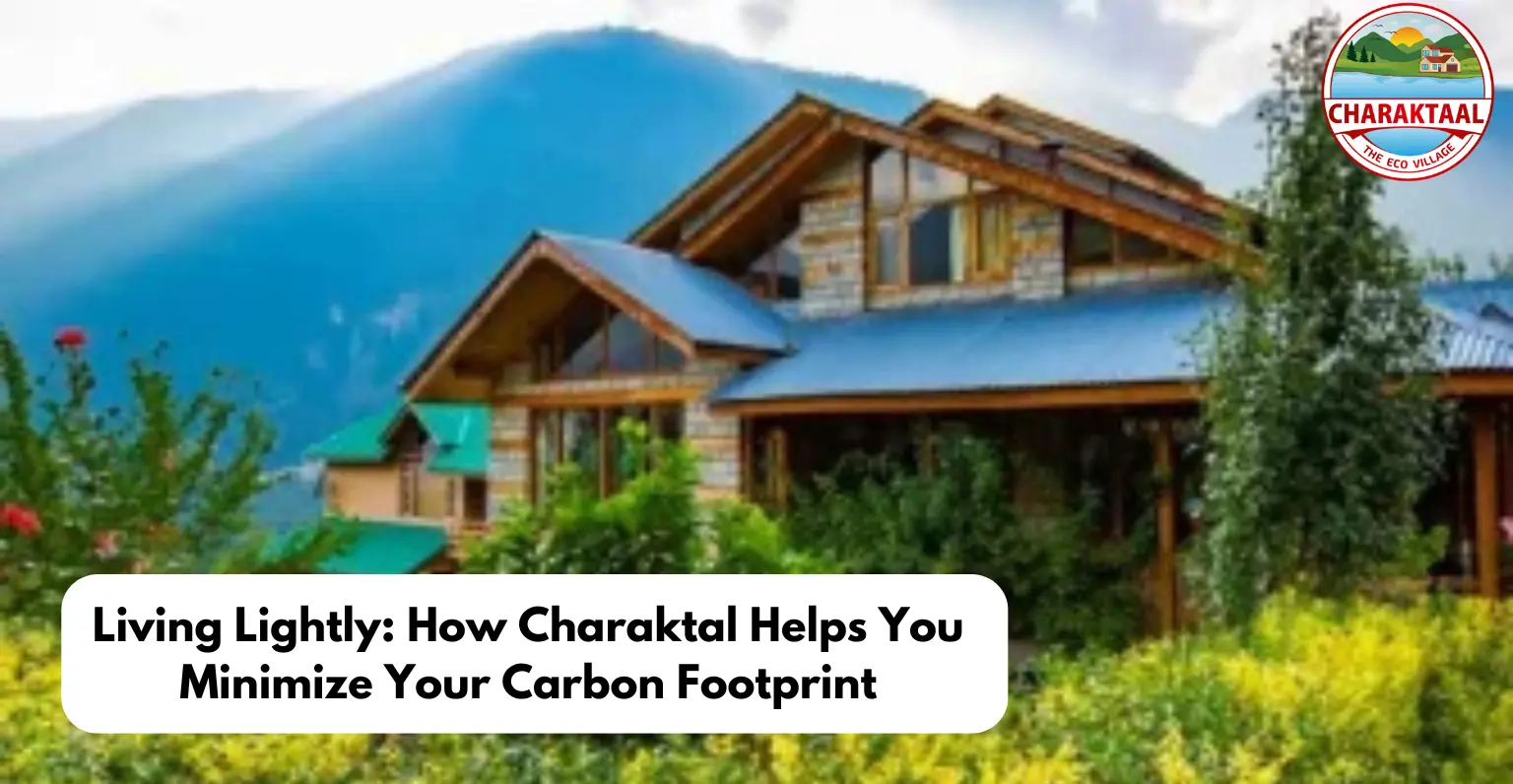
The eco-village model offers something different: land that is developed with ecological sensitivity, where the natural environment is treated as an asset to be preserved rather than cleared. At Charaktaal, more than 65 percent of the land is maintained as open green space. Roads are planned and paved. Cabling is underground, which means no ugly poles interrupting your forest view. Rainwater harvesting and solar-powered lighting are built into the infrastructure from the ground up, not bolted on as afterthoughts.
This matters for several reasons.
First, it matters for livability. A home surrounded by functioning forest, clean water, and clean air simply offers a higher quality of daily life than one that has been crowded into a concrete development. The amenities at Charaktaal — yoga and meditation decks, organic gardens, forest-bathing trails, an open-air amphitheatre — are not marketing embellishments. They are the practical infrastructure of a lifestyle that prioritises wellbeing.
Second, it matters for long-term value. Properties that are ecologically responsible, built with sustainable materials, and embedded in well-maintained natural environments hold their value better over time. As climate awareness grows and urban air quality continues to deteriorate, the premium on genuinely clean, green living spaces will only increase. Buying into an eco-village today is, in part, a bet on the direction of values — and that bet looks increasingly safe.
Third, it matters for regulatory and reputational reasons. Eco-sensitive development in the Himalayan foothills is increasingly under scrutiny. Projects that cut corners on environmental compliance face legal and reputational risks. Charaktaal Greens’ commitment to responsible development is not just an ethical stance; it is a form of risk management that protects your investment.
Understanding the Offering: What You Are Actually Buying
Charaktaal offers several entry points depending on your goals and budget.
Plots are the most flexible option. If you want to design and build your own home on a piece of land that is already part of a well-planned, well-maintained community — with roads, security, underground utilities, and green belts already in place — a plot gives you that canvas. This is ideal for buyers who have a strong sense of the home they want to create and value the autonomy to build it.
Studios offer a compact, fully realised living space — ideal for individuals, couples, or investors looking to generate rental income from the growing market for retreat-style accommodation in the hills. A well-furnished studio in an eco-village setting near Lansdowne can command strong weekly or monthly rental rates from urban professionals seeking working holidays, wellness retreats, or simply a change of scene.
2 BHK Luxe Villas represent the sweet spot for most family buyers. Thoughtfully proportioned, ecologically sensitive in their construction, and set within the broader amenity ecosystem of the village, these offer a complete second-home experience without the complications of building from scratch.
3 BHK Sky Mansions are for those who want the full expression of Himalayan luxury living — generous space, premium finishes, and the expansive sense of altitude that makes living in the hills feel genuinely different from anywhere else.
Each of these formats sits within the same master-planned community, which means that regardless of the option you choose, you have access to the full range of facilities and the security of a well-governed, well-maintained estate.
The Investment Case, Plainly Stated
Let us bring this together into a clear framework for thinking about the investment.
Capital appreciation potential is high. Lansdowne is where Mussoorie was fifteen years ago — beautiful, accessible, and largely undiscovered by mainstream real estate investors. Early movers in comparable markets have seen significant returns. There is no guarantee that history will repeat precisely, but the structural conditions are similar.
Rental yield is a real option. The market for short-term eco-retreat rentals in Uttarakhand is growing rapidly. Urban professionals willing to pay a premium for a working-holiday environment in clean air and natural surroundings are an expanding and underserved demographic. A well-maintained villa or studio at Charaktaal, marketed through the right channels, can generate meaningful rental income while you are not using it yourself.
The lifestyle dividend is not trivial. This is often underestimated in purely financial analyses, but it is real. Access to a second home in the hills — somewhere you can decompress, reconnect with nature, and simply breathe — has genuine value for your health, your relationships, and your productivity. The cost of stress-related health issues, urban lifestyle diseases, and the psychological toll of permanent city living is substantial. A hill retreat is, in part, an investment in your own wellbeing.
The community factor adds stability. One of the underappreciated risks of buying isolated rural property is the difficulty of maintenance, security, and community when you are not present. An eco-village like Charaktaal, with 24/7 security, professional management, and an active community of like-minded owners, solves this problem. Your property does not deteriorate in your absence; it is looked after by a system designed for exactly that.
Spiritual and Ecological Proximity: The Intangible Assets
Any honest account of what makes Charaktaal special has to include the landscape in which it sits.
Durga Devi Temple, Kanvashram on the banks of the Kho River, Tadkeshwar Mahadev — these are not merely tourist attractions. They are ancient centres of spiritual significance that have drawn seekers, pilgrims, and wanderers for centuries. Living near them, or returning to them regularly, is a form of rootedness that has become rare in modern urban life.
Jim Corbett National Park is within accessible distance, offering some of the finest wildlife experiences in South Asia. Tip N Top viewpoint in Lansdowne offers panoramic Himalayan vistas that reset something deep in the nervous system. Bhulla Lake is a quiet, unhurried place that has not yet been spoiled by commercialisation.
These are not amenities that a developer can create or replicate. They are gifts of geography and history, and they surround Charaktaal. That combination — thoughtful human development nested within an extraordinary natural and spiritual landscape — is rare, and rarity, in real estate as in everything, commands a premium.
A Word About Timing
In every real estate conversation, someone eventually says: “the best time to buy was ten years ago.” The corollary — “the second-best time is now” — is a cliché, but it exists because it is structurally true.
The Uttarakhand government has been actively investing in road infrastructure, digital connectivity, and tourism development across the Garhwal and Kumaon regions. The state’s Land Policy has been updated to facilitate responsible development while protecting forest cover. National highways connecting the hills to the plains are being improved. The airport at Dehradun (Jolly Grant) is being expanded. Each of these developments makes the hills more accessible and, therefore, more valuable.
Meanwhile, the demographic wave of Indian professionals reaching peak earning years — with the means to invest and the desire for a life that is larger than a flat in a metro city — is swelling. Supply of genuinely well-planned, ecologically responsible hill properties remains constrained. This is the fundamental equation of scarcity meeting rising demand, and it does not resolve in the direction of lower prices.
The Question Worth Asking Yourself
If you have read this far, something in this vision probably resonates. Perhaps you have driven through the Garhwal hills and felt something shift in your chest — a quieting, a rightness. Perhaps you have sat in a traffic jam or stared at an air quality index in the red and thought: this is not sustainable. Perhaps you have looked at your retirement or your children’s future and wanted to offer them something more grounded than a city apartment.
The question worth asking yourself is not “can I afford this?” The question is: “what is the cost of not doing this?” The cost of waiting while prices rise. The cost of continuing without a retreat. The cost, year after year, of a life lived entirely inside concrete and noise.
Charaktaal Eco Village near Lansdowne is not a developer’s pitch. It is an invitation to a different way of being — one that happens to make excellent financial sense.
The hills are patient. But the opportunity is not infinite.
To explore plots, studios, villas, and investment options at Charaktaal Eco Village, visit charaktal.com or call +91 92115 68264. The team would be glad to walk you through the master plan, pricing, and what life in this remarkable corner of Uttarakhand actually looks and feels like.